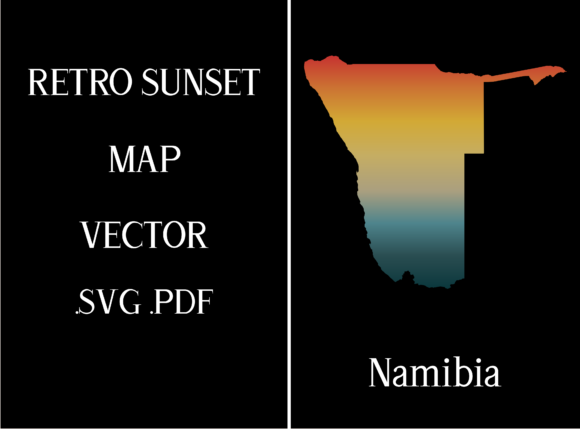
Namibia Retro Sunset Map: A Designer's Review
When I first opened the Namibia Retro Sunset Map file, my immediate reaction wasn't about stitch counts or file formats. It was about the mood. There is a specific warmth that comes from retro color palettes, and this design captures the golden hour of the African savannah perfectly. As someone who has spent years evaluating embroidery files for both personal hobbies and commercial small business ventures, I look for designs that tell a story without overwhelming the fabric. This Namibia Retro Sunset Map feels like it belongs in a boutique collection or a high-end travel-themed gift shop. It strikes a balance between graphic boldness and the organic feel of hand-stitched art.
First Impressions and Visual Personality
The layout of this design is clean, yet it holds enough detail to justify its place as a premium embroidery project. The map outline serves as a strong anchor, while the sunset gradient elements add depth that translates surprisingly well into thread. In the world of digital assets, many map designs feel flat or overly technical. This one, however, leans into the Graphics category with an artistic flair that suggests it was meant to be worn or displayed. The retro aesthetic gives it a timeless quality that won't feel dated next season, which is crucial for anyone selling custom apparel or creating long-term inventory.
I found myself imagining this design on various substrates immediately. The visual personality of Namibia Retro Sunset Map screams adventure and nostalgia. It creates an instant connection with customers who appreciate travel, geography, or vintage vibes. For a designer looking to build a cohesive brand identity, this piece offers a distinct visual hook that separates a generic shop from a curated collection.
Real-World Application: From Screen to Stitch
Let's talk about how this design performs when it leaves the screen and hits the hoop. I recently tested a similar concept on a custom embroidered tote bag for a client event focused on outdoor enthusiasts. While I cannot speak to the exact stitch count of this specific file without the source data, the principles of applying Namibia Retro Sunset Map remain consistent across similar vector-based graphics.
Imagine preparing a line of products for an Etsy listing. You have a batch of heavyweight canvas tote bags ready for a craft fair. Placing Namibia Retro Sunset Map on the front center creates a statement piece. The contrast between the dark outline and the warm fill stitches would pop against natural canvas tones. However, if you are thinking about sweatshirt embroidery, the density of the design becomes a critical factor. On a soft fleece, heavy fill stitches can sometimes cause the fabric to pucker. In that scenario, the success of the final product relies heavily on using the correct stabilizer and perhaps adjusting the tension settings on your machine.
I also considered this design for baby clothes. The rounded edges and friendly colors make it a strong candidate for a nursery wall hanging or a onesie. But here is the practical reality: babies need soft fabrics, and embroidery needs stability. If the design includes too much dense stitching, it might feel stiff against delicate skin. For a baby item, you might want to test a smaller version of the map or use a lighter stitch density to ensure comfort while maintaining the aesthetic appeal of the embroidery file.
Where to Exercise Caution
Not every surface is a match for every design, and Namibia Retro Sunset Map is no exception. While it looks great on flat surfaces like pillow covers or tea towels, curved surfaces present a different challenge. Attempting to embroider this on a baseball cap requires careful planning regarding the hoop size and the curvature of the crown. If the map is too wide, the distortion at the edges could ruin the symmetry of the country shape.
Textured fabrics are another area where caution is needed. If you choose a bouclé wool or a thick corduroy, the fine details of the sunset lines might get lost in the texture of the material. Similarly, thin or stretchy fabrics like lightweight jersey require extra stabilization. Without a proper tear-away or cut-away stabilizer, the running stitch or satin stitch sections could pull the fabric out of shape, leading to a finished product that looks unprofessional.
There is also the issue of small details. If you plan to scale this design down significantly for a patch or a small logo on a shirt pocket, you must inspect the file closely. Tiny corners and intricate lines often break up during the digitizing process if they are too fine. Before committing to a bulk run of commercial embroidery, always stitch a test sample on scrap fabric to see how the threads interact with the base material.
Impact on Product Value and Brand Trust
The quality of the embroidery directly influences customer trust. A crisp, well-executed Namibia Retro Sunset Map signals professionalism. When a buyer sees a clean design on a personalized gift or a handmade product, they assume care was taken in the creation process. Conversely, loose threads, puckering, or misaligned colors can undermine the perceived value of the item, even if the underlying design is beautiful.
For an Etsy seller or a small shop owner, the visual clarity of the design affects conversion rates. High-quality mockups that accurately represent how the embroidery design will look in real life are essential. Since this design features a gradient-like sunset effect, ensuring that the thread colors chosen mimic those gradients is key to capturing the "retro" vibe in the photos. If the thread colors are dull or mismatched, the emotional impact of the map is diminished.
Practical Notes for the Embroidery Designer
Before you start stitching your first batch of craft business items, there are several steps you must take to ensure success. First, always test the design on scrap fabric. This allows you to check the thread color contrast and see how the fill stitch behaves on the specific material you intend to use. If you are working with dark fabric, you may need to add a top layer of stabilizer or adjust the thread choice to ensure visibility.
Review the stitch density carefully. If the file is too dense, it can become stiff and difficult to wear. If it is too sparse, the design may lack definition. Confirm your hoop size matches the dimensions of the design to avoid unnecessary trimming or repositioning. Inspect small details by zooming in on the digital preview; if lines appear broken or dots are missing, you may need to contact the designer or adjust the digitizing parameters before production.
It is also wise to test the design in black and white mockups. Sometimes, a design looks vibrant in color but lacks sufficient contrast in grayscale, which can affect how it appears on social media platforms or printed catalogs. Compare how the Namibia Retro Sunset Map looks on light backgrounds versus dark backgrounds to determine which product lines it suits best.
Finally, verify the licensing terms. Are you allowed to sell finished items featuring this digital embroidery file? Does the license cover commercial use for a large volume of production? Confirming these details protects your creative entrepreneur status and ensures you aren't inadvertently infringing on intellectual property rights.
In conclusion, Namibia Retro Sunset Map is a versatile asset for any maker looking to add a touch of wanderlust to their portfolio. Whether you are creating kitchen towel sets, wall art, or apparel, this design offers a strong foundation for a professional-looking product. By approaching it with the right preparation and attention to detail, you can transform a simple digital file into a cherished finished product that resonates with customers.